The process of appointing ambassadors varies across countries depending on their political systems, constitutional arrangements, diplomatic traditions, and state structures. However, most countries adopt a mixed system that combines career diplomats and political appointees. In many countries, “competition” is used in the entry process for becoming a career diplomat, but there is generally no direct open competition for ambassadorial positions.

In many countries, selecting ambassadors from among experienced government officials with long careers in diplomacy is considered the primary approach. Countries such as Japan, Germany, and India typically appoint ambassadors from their foreign service, valuing institutional continuity and professional expertise. However, in some countries, political appointments are also significant. In the United States, for example, it is common for the president or head of government to appoint trusted and capable individuals as ambassadors, with around 30 percent of ambassadors being politically appointed.
According to experts, selecting ambassadors through open competition remains rare worldwide. Although some countries have discussed such practices to enhance transparency, they have not been widely implemented. Overall, global practice shows that ambassadorial appointments prioritize a balance between professional experience, political trust, and institutional stability. While many countries use open competition to recruit diplomats at the entry level, none are known to appoint ambassadors solely through open competition.
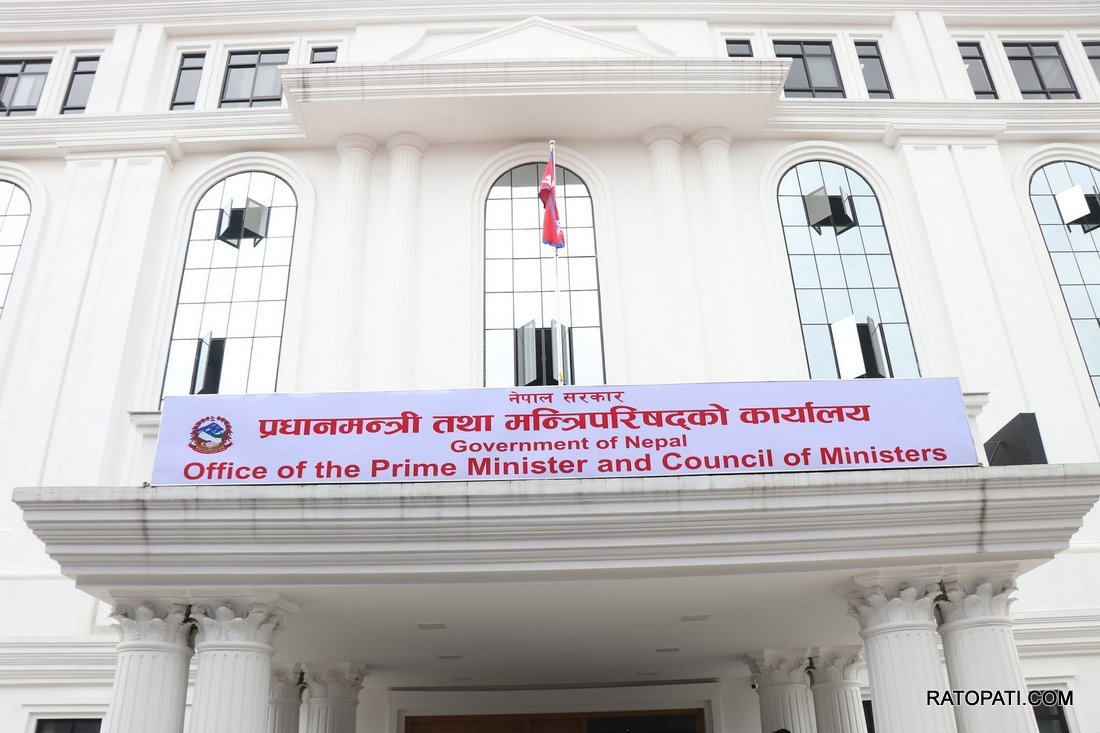
At this time, the Government of Nepal has begun preparations to appoint ambassadors through open competition for vacant positions. According to officials from the Ministry of Foreign Affairs, the government is preparing to publish vacancy notices, and this would be the first instance in Nepal of appointing ambassadors through an open competitive process. Previously, in 2019, the government led by KP Sharma Oli had set criteria for political appointments of ambassadors, but those criteria were not effectively implemented. Traditionally, Nepal has appointed ambassadors either from among career diplomats within the Ministry of Foreign Affairs or through selections made by ruling political parties.
According to the Guidelines on the Appointment of Ambassadors, 2075 BS, at least 50 percent of ambassadorial positions must be filled by career diplomats, with the remaining 50 percent allocated for political appointees. Sources indicate that Foreign Minister Shisir Khanal has already signaled to senior officials that vacancy announcements will soon be issued, although the exact timing remains unclear.
While Minister Khanal has announced that some ambassadorial positions will be filled through open competition, he has not disclosed detailed plans. The ministry’s Senior Management Team, which consists of all joint secretaries, is responsible for key decisions. Officials say that groundwork has already been laid to identify potential candidates among career diplomats.
The vacancy notice is expected to request details such as age, experience, and educational qualifications, and may also consider additional credentials such as publications, articles, and research papers. Officials suggest that the announcement could be made within the coming week. Although this move is seen as historic, a retired diplomat has cautioned that open competition alone does not guarantee the selection of qualified candidates.
Officials say the government aims to ensure transparency through this process. The Rastriya Swatantra Party had also called for such vacancies in June 2024 when it was part of a coalition government with CPN-UML and the Maoist Centre. While many countries appoint career diplomats as ambassadors, provisions also exist for political appointments, especially for individuals trusted by political leadership and possessing strong profiles and language skills.
Earlier this month, the government decided to recall six ambassadors appointed by the KP Oli administration. As a result, 17 ambassadorial positions, including in key countries such as India, China, the United States, and the United Kingdom, have become vacant. During a recent meeting, Minister Khanal stated that he had obtained consent from Prime Minister Balendra Shah to issue vacancy notices. He also noted that serving in India and China would now be a prerequisite for becoming the foreign secretary.
Officials indicate that around 50 percent of ambassadorial appointments may be made through open competition, with some claiming the proportion could exceed that figure. Ambassadorial appointments are also linked to broader restructuring within the ministry, including discussions on reducing the number of embassies and opening new missions. Nepal currently has 44 diplomatic missions—34 embassies and 10 consulates. Finance Minister Swarnim Wagle has reportedly pushed for reducing the number of missions as part of austerity measures.
By the end of July, six additional ambassadorial positions will become vacant as the terms of ambassadors appointed on May 7, 2021, to countries including Brazil, Bahrain, Bangladesh, Myanmar, Austria, Oman, and Egypt expire. This will allow the government to appoint up to 24 ambassadors at once. However, the plan to appoint ambassadors through open competition has drawn criticism within diplomatic circles.
“Qualified individuals may not necessarily be selected through open competition,” a former diplomat said, arguing that the role requires loyalty and commitment to the state, which may be compromised. He suggested that “head-hunting and talent-hunting” approaches would be more effective, identifying and placing individuals based on expertise rather than relying on open competition.
Most countries continue to rely on a combination of career diplomats and political appointments, maintaining a balance between experience and political trust. In some countries, ambassadorial appointments also require parliamentary approval. In the United States, nominees must be confirmed by the Senate, which is believed to ensure transparency and accountability. Formally, ambassadors are usually appointed by the head of state; in the United Kingdom, they are appointed in the name of the monarch.
In today’s world, diplomacy plays a central role in global governance. Attempting to manage diplomatic affairs without careful consideration could lead to serious consequences. Experts suggest that Nepal should rely on globally tested practices and experiences rather than adopting rare and unproven systems.
Diplomatic practice itself has become increasingly multidimensional amid changing global political and economic dynamics. Experts say diplomacy today is not limited to formal relations between states but encompasses the protection of national interests, balancing of global power, and strategic cooperation.
For countries like Nepal, situated between major powers, careful and strategic diplomacy is particularly important. Analysts note that nations use diplomacy to secure interests related to security, economic development, trade, energy, and diaspora engagement. The growing rivalry between the United States and China has made the diplomatic role of smaller and developing countries even more sensitive.
Economic diplomacy has gained particular importance in recent years, focusing on attracting foreign investment, promoting exports, and boosting tourism. Multilateral diplomacy has also strengthened, with international cooperation through organizations such as the United Nations and the World Health Organization addressing issues like climate change, trade, and global security.
At the same time, public and digital diplomacy have become increasingly influential, with countries using social media and communication platforms to shape their global image and engage directly with international audiences.
Another key aspect of modern diplomacy is crisis management—responding effectively to pandemics, conflicts, migration challenges, and natural disasters. Experts conclude that diplomacy today has evolved into a multidimensional process aimed at protecting national interests, maintaining global balance, and creating economic and strategic opportunities. In this context, they caution that governments should rely on proven global practices rather than adopting risky and untested approaches driven by short-term considerations.