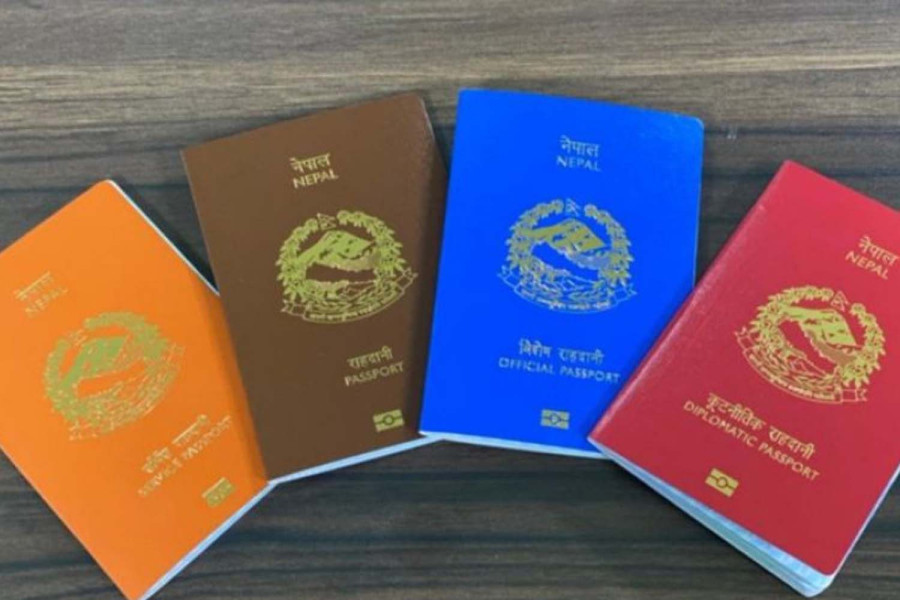
The government is preparing to amend the Passport Act, 2019 (2076 B.S.), and a draft bill for the amendment has already been prepared. According to the draft made public by the Ministry of Foreign Affairs, passports will now be categorized into five types.

Under the existing Passport Act, 2019, there are four types of passports: diplomatic, official (service), special, and ordinary. The new draft proposes adding a fifth category—“temporary passport.”
The draft states: “Notwithstanding anything written elsewhere in this Act, if an applicant is unable to appear in person before the concerned authority to apply for a passport under Section 10 due to prescribed circumstances, the Department may issue a temporary passport valid for up to two years.”
The scope of “official travel abroad” has also been expanded in the draft. Travel for medical treatment funded by the government will now be recognized as official travel.
The draft further introduces provisions to deny passports to individuals involved in cooperative fraud-related offenses, which was not included in the existing Act. It states that passports will not be issued if an investigating authority formally requests withholding issuance in cases involving cooperative crimes, homicide, rape, or other serious offenses punishable by life imprisonment.
Similarly, passports will not be issued if a court orders so while a case is under trial, or if a person has already been convicted of such offenses and the court or authorized body directs that a passport not be issued.
The draft specifies that diplomatic and special passports will be issued based on recommendations approved by the Federal Parliament, the Government of Nepal, the Supreme Court, or constitutional bodies. Recommendations from provincial or local governments must be endorsed by the relevant ministry of the Government of Nepal.
Officials or employees who receive diplomatic or special passports must return them to the Department of Passports within the prescribed period after the purpose is fulfilled, or if they leave office or are suspended.
For children born abroad to Nepali fathers, the draft allows the issuance of an ordinary passport valid for five years for the first time, based on birth registration or temporary registration records maintained by Nepali missions abroad.
The draft also proposes strict penalties for misuse. If a person is found to have obtained a passport using forged citizenship certificates, national identity cards, or minor identity documents, they may face a fine ranging from NPR 200,000 to 500,000, imprisonment from one to three years, or both. If a passport is obtained by falsifying the date of birth by one year or more, a fine ranging from NPR 100,000 to 300,000 will be imposed.