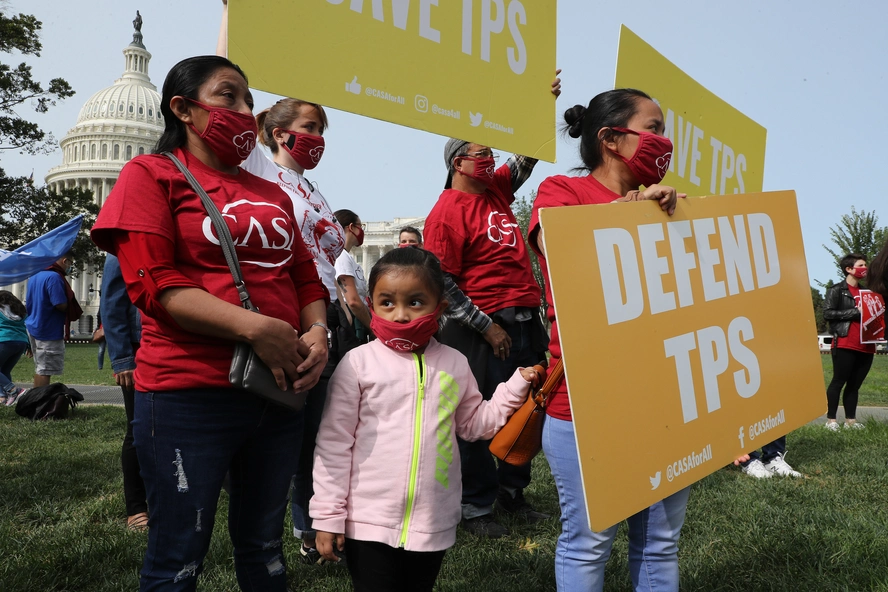
Temporary Protected Status (TPS) granted to citizens of Nepal, Nicaragua, and Honduras in the U.S. has finally come to an end. The U.S. federal appeals court has sided with the Trump administration, allowing the government to proceed with its decision. Last month, a lower court had blocked the Trump administration from ending TPS for these three countries until at least November 18. However, the appeals court overturned that decision on Wednesday. As a result, TPS holders must now leave the U.S. Nepal had been receiving TPS since the 2015 earthquake.

Before last month’s ruling, the Trump administration had decided to end TPS for Nepal on August 5 and for Nicaragua and Honduras at the beginning of September. Following Wednesday’s appeals court decision, many Nepalis have been left in a state of uncertainty. The federal appeals court suspended the lower court’s order, effectively ending temporary protection for around 60,000 immigrants in the U.S.
This means that nearly 7,000 Nepalis will now have to leave the U.S. immediately, according to legal experts. If they do not leave promptly, they may face fines or penalties, so TPS holders are advised to remain cautious. Nepal’s TPS designation officially ended on August 5. The TPS designations for 51,000 Hondurans and 3,000 Nicaraguans will expire on September 8, after which they too will be eligible for removal.
The Ninth Circuit Court of Appeals in San Francisco had previously issued an emergency stay, halting deportations until the appeal process was completed.
The judges wrote in the order: “The district court’s order granting plaintiffs’ motion to postpone, entered July 31, 2025, is stayed pending further order of this court.”
TPS is a status granted by the Secretary of Homeland Security, which protects immigrants from deportation and allows them to work legally in the U.S. The Trump administration has aggressively tried to revoke these protections, making more immigrants eligible for removal. This is part of a broader campaign to deport large numbers of immigrants.
The current Homeland Security Secretary, Kristi Noem, has said that TPS can be extended if conditions in an immigrant’s home country—such as a natural disaster, political instability, or other dangerous circumstances—make it unsafe to return.
TPS holders from Honduras and Nicaragua have been living in the U.S. since Hurricane Mitch devastated both countries in 1998—over 26 years ago.
The Trump administration has already ended TPS for approximately 350,000 Venezuelans, 500,000 Haitians, over 160,000 Ukrainians, and thousands from Afghanistan and Cameroon. Some of these decisions are currently being challenged in federal court.