Khabarmala Correspondent

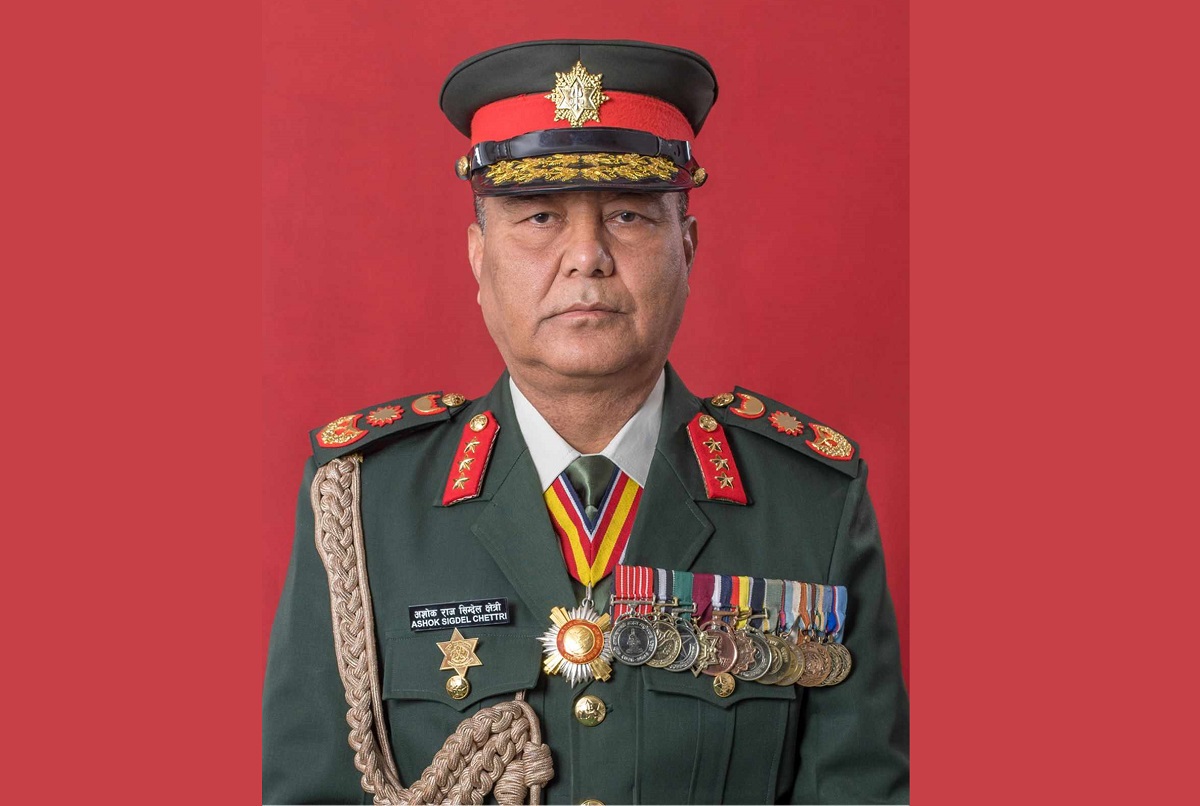
The National Human Rights Commission of Nepal has raised questions over what it described as the indifferent role of the Nepali Army in preventing violent incidents during the Gen Z movement protests on Bhadra 23 and 24.
According to the Commission’s investigation report, although documents show that Kathmandu’s Chief District Officer requested assistance from the Nepali Army after the protests on Bhadra 23 turned violent and moved beyond the control of security personnel, such assistance was not effectively provided in practice.
The report, made public on Wednesday, states that the Army’s explanations regarding why it could not be mobilized to control the violence were inconsistent. On one hand, the Army claimed it was not deployed because there was no formal government decision authorizing mobilization. On the other hand, the Commission noted that the Army was deployed at 10 p.m. on Bhadra 24 without a government decision, contradicting its earlier statement.
“The Army, which had already been stationed to protect Singha Durbar and the Presidential Residence, appears not to have made even minimal efforts to safeguard those locations,” the report states. “While it was claimed that the Army could not be mobilized throughout Bhadra 23 and 24 due to the absence of a government decision, the fact that it was deployed from 10 p.m. on Bhadra 24 without such a decision demonstrates inconsistency in the Army’s position.”
The report further states that on Bhadra 24, protesters vandalized and set fire to the Federal Parliament building, Singha Durbar, the Presidential Residence, the Supreme Court, and numerous government and private structures across the country, while security agencies failed to respond effectively.
“While protesters were vandalizing and burning the Federal Parliament building in Baneshwor, the historically significant Singha Durbar, the Presidential Residence — home of the Supreme Commander of the Nepali Army — the Supreme Court, government offices nationwide, residences of political leaders and government officials, and private commercial buildings, all security agencies remained mere spectators,” the report says.
The Commission noted that there has been widespread public discussion that such large-scale destruction and arson could have been prevented had the Nepali Army merely come out of its barracks. In light of these concerns, the Commission’s investigation committee summoned the Chief of Army Staff and other senior military officials for questioning. However, according to the report, the Nepali Army did not cooperate with the investigation.
The report also states that after the investigation committee had already submitted its findings to the Commission Chairperson, the Army later submitted written statements, including one from the Chief of Army Staff, through sealed correspondence.