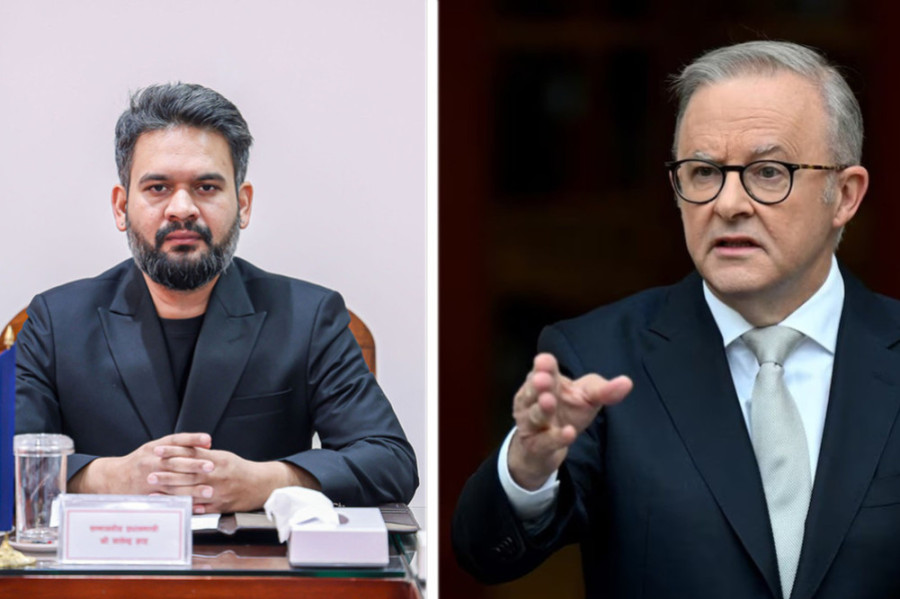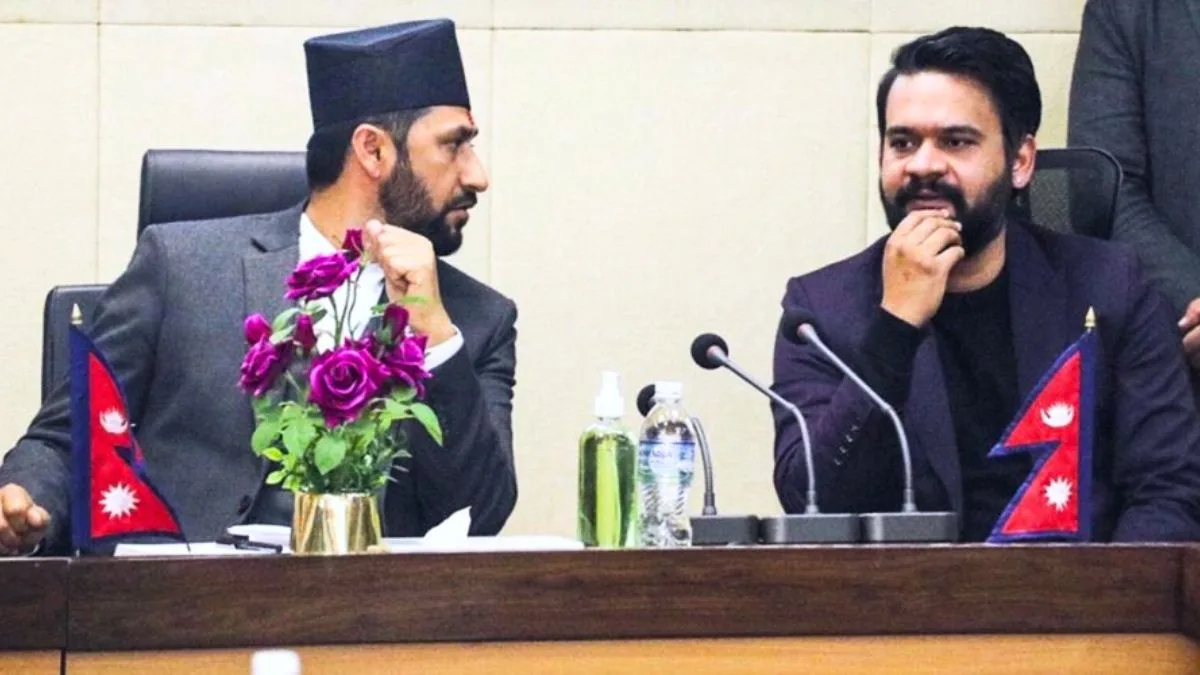
Chairperson of the Rastriya Swatantra Party (RSP), Rabi Lamichhane, is preparing to visit China in the last week of August, according to sources. A five-member delegation led by Lamichhane is scheduled to travel to Beijing at the invitation of the Communist Party of China (CPC).

According to sources, the RSP has requested the Chinese side to arrange a meeting between Lamichhane and Chinese President Xi Jinping. “Coordination is underway with the Chinese side to facilitate a meeting with President Xi,” an RSP leader said.
However, according to the current schedule, Lamichhane is expected to meet Chinese Vice President Han Zheng, Foreign Minister Wang Yi, and officials from the International Department of the CPC.
Earlier, during his visit to India in the first week of June, Lamichhane met Indian Prime Minister Narendra Modi as well as senior leaders of the ruling Bharatiya Janata Party (BJP), including Home Minister Amit Shah, External Affairs Minister S. Jaishankar, and BJP President Nitin Nabin.
RSP leaders say that, based on the party’s strong mandate in the recent elections and Lamichhane’s high-level meetings in India, the party is seeking similar engagement with China’s top leadership.
Lamichhane’s Beijing visit was initially scheduled for the third week of July but was postponed after a meeting with President Xi could not be confirmed and due to other domestic issues. Discussions regarding the visit have reportedly been ongoing between the two sides since June.
RSP leaders said Lamichhane had received an invitation from China before his India visit, but given Nepal’s relations with India and his own priorities, he decided to visit New Delhi first.
Debate Over Party Diplomacy and State Diplomacy
The recent diplomatic activities of the RSP have sparked a debate in Nepal over the relationship between party diplomacy and state diplomacy.
Although the government and the ruling party in Nepal are both led by the Rastriya Swatantra Party, differences have begun to emerge in the way foreign relations are being conducted. Lamichhane’s possible China visit, following his India visit, has raised questions about whether the ruling party is pursuing a separate diplomatic track alongside the government.
Under Nepal’s Constitution, the primary responsibility for conducting foreign policy lies with the government. Official diplomatic relations are managed through state institutions, including the Ministry of Foreign Affairs, the Prime Minister, and the Head of State.
However, in many democratic countries around the world, ruling political parties also maintain international relations with foreign political parties, exchange experiences, and engage in political dialogue.
During Lamichhane’s India visit, he held meetings with Prime Minister Modi and senior BJP leaders. Following that, preparations are underway for meetings with CPC officials during his China visit, with efforts reportedly being made to arrange a meeting with President Xi as well.
This has raised concerns among some observers over whether the ruling party is attempting to conduct a parallel diplomatic approach separate from the government.
Experts Warn of Possible Diplomatic Confusion
Diplomatic experts say that international engagement by political parties is not unusual. In many countries, ruling parties maintain relations with foreign political organizations as part of political diplomacy.
However, experts emphasize that official foreign policy, bilateral agreements, security issues, and matters related to national interests must be handled through government channels.
“International engagement by political parties can help promote national interests, but there must be a clear boundary between party priorities and state priorities,” a diplomatic expert said.
Experts have also warned that such practices are uncommon in countries where the same party controls both the government and political organization. They argue that unclear coordination between party and state diplomacy could create confusion in Nepal’s foreign relations and potentially weaken the country’s diplomatic credibility.
The RSP has consistently claimed that it represents a new political approach different from traditional parties. As a new political force, it appears to be seeking a more active role in international relations.
The party has presented Lamichhane’s India and China engagements as efforts to expand Nepal’s international outreach and maintain balanced relations with its two major neighbors.
RSP leaders say the party wants to increase dialogue with international political parties and leaders based on the public mandate it received in recent elections.
Nepal’s Balancing Act Between India and China
Nepal has long followed a policy of maintaining balanced relations between India and China. The new government has also stated that it will prioritize development diplomacy, investment, and infrastructure cooperation with both neighboring countries.
However, concerns have grown after several recent developments, including the foreign minister’s return from India, followed by the party chairperson’s India visit, and reports that the Prime Minister’s adviser Kumar Beni was recently sent to India on a confidential mission.
Observers say such overlapping diplomatic activities may create uncertainty among the public and raise questions about Nepal’s foreign policy coordination.
While political party diplomacy can complement state diplomacy, experts argue that Nepal needs a clear and coordinated foreign policy framework to avoid confusion and protect national interests.
They warn that if party-level and government-level diplomatic initiatives move in different directions, it could create challenges for Nepal’s diplomatic practice and international credibility.