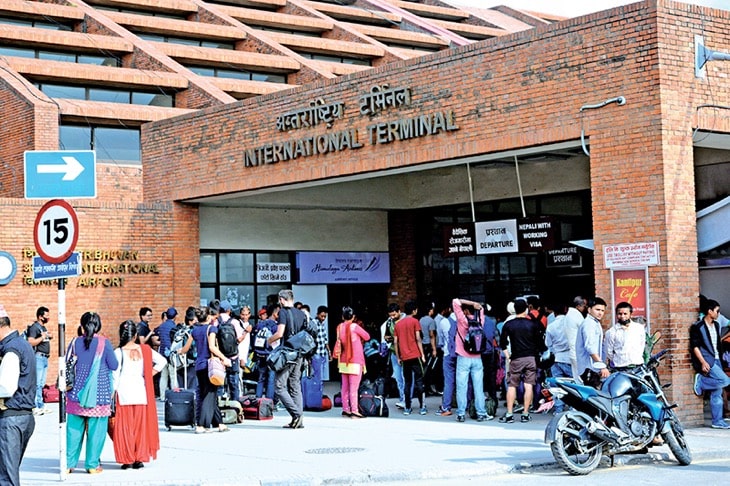
Since data showing that 67 Nepalis died in Japan over the past ten months, including 25 who died by suicide, was made public, the mental health of Nepalis living abroad has once again become a subject of national debate. However, this problem is not limited to Japan alone. Reports of Nepalis dying by suicide have also surfaced from time to time in South Korea, Australia, Canada, the United States, and Gulf countries. Nevertheless, the Government of Nepal still does not have official statistics on Nepalis who die by suicide abroad.

The data show that 67 Nepali citizens died in Japan over the past ten months, of whom 25 died by suicide. According to the Ministry of Foreign Affairs, most of those who died had gone to Japan on student visas and were working part-time while pursuing their studies.
According to the Ministry of Foreign Affairs, 67 Nepalis died in Japan between mid-July 2025 and June 1, 2026. After The Kathmandu Post published these figures, they highlighted the alarming situation facing Nepalis living abroad. Of those who died, 25 died by suicide. Most of the deceased were Nepalis who had traveled to Japan on student visas. Nepali students in Japan are facing the dual burden of restricted working hours, a high cost of living, tuition fees, house rent, loans taken in Nepal, and financial expectations from their families. According to leaders of the Nepali community, these pressures appear to be pushing many people into severe mental distress.
Similarly, an academic study conducted in South Korea reported that 43 out of 143 Nepali workers who died between 2009 and 2018 had died by suicide. The study identified language barriers, workplace stress, social isolation, debt burden, and lack of access to mental health services as the major contributing factors. South Korea itself is among the developed countries with one of the highest suicide rates in the world. Various international studies have shown that even South Korean citizens face a high risk of suicide due to intense social competition, work pressure, and mental health challenges.
Saudi Arabia, Qatar, the United Arab Emirates, Kuwait, and Malaysia record the highest number of deaths among Nepali migrant workers. Although Nepal’s Foreign Employment Board publishes the total number of deaths each year, it does not regularly release detailed classifications distinguishing suicides, accidents, natural deaths, and other causes. As a result, the true extent of suicide among Nepali workers in the Gulf countries remains unanswered. Similar reports emerging from prosperous countries such as Australia, Canada, and the United States—often regarded as dream destinations with better income opportunities—also indicate that the government and other concerned stakeholders need to become more vigilant.
Although Australia, Canada, and the United States are home to large Nepali student and migrant communities, there are no official Nepali statistics on suicides, except for a few documented cases. Most incidents become public only through local police investigations, universities, or media reports. Various studies have shown that academic pressure, the high cost of living, employment uncertainty, concerns over visa renewal, and the lack of social interaction have negatively affected the mental health of international students.
According to Nepal’s Foreign Employment Board, 1,346 Nepali migrant workers died abroad during the fiscal year 2080/81 (2023/24). Most of these deaths occurred in Malaysia, Saudi Arabia, Qatar, the United Arab Emirates (UAE), and other destination countries. Although the causes of death included natural causes, accidents, suicide, and other factors, the Board has not published separate statistics specifically on suicides.
Earlier, data from the Foreign Employment Board showed that 4,035 Nepali migrant workers died abroad between fiscal years 2077/78 and 2079/80 (2020/21–2022/23). During the same period, 870 workers were reported injured or seriously ill. Nepal’s Office of the Auditor General also pointed out in its report the need for mental health services, psychosocial counseling, and suicide prevention programs for migrant workers.
Harihar Kant Poudel, Nepal’s Acting Ambassador to Japan, has said that the increasing number of deaths has made the management of deceased bodies increasingly challenging. When Nepalis die abroad, their families often wish to bring the bodies back to Nepal but face serious financial hardship. Repatriating a body from Japan to Nepal costs approximately NPR 1.2 million. However, educational consultancies that send students to Japan on student visas do not bear these costs, and in many cases they do not even remain in contact with the Nepali Embassy. Since such individuals are outside Nepal’s formal labor migration system, the Foreign Employment Board does not provide financial assistance for repatriation or other related support when they die.
Nepal’s educational consultancy agencies have often been criticized for sending students to Japan by charging high fees while making attractive promises. According to Japanese government statistics, by 2025 there were approximately 116,000 Nepali students living in Japan, making Nepal the second-largest source of international students after China. Including 9,908 permanent residents, the total Nepali population in Japan has reached around 309,000, making Nepalis the country’s fifth-largest immigrant community.
For many young Nepalis, going abroad has become a symbol of a better future. They spend millions of rupees to travel overseas with the hope of improving their family’s financial situation, obtaining a better education, or securing permanent residency. However, once they arrive abroad, the reality they encounter is often very different from the picture presented to them in Nepal.
Students who travel on student visas, in particular, often believe they can support all their expenses by studying and working at the same time. In many countries, however, working hours are legally restricted. Rising house rents, tuition fees, increasing prices of daily necessities, and transportation costs often result in expenses exceeding their earnings.
Most Nepalis who go abroad take out loans from banks, cooperatives, or private lenders. Some mortgage their family property, while others place their families under significant financial risk. After arriving overseas, the question they most often receive from Nepal is: “When will you repay the loan?” or “When will you send money?” Such constant pressure, combined with being away from family and becoming mentally vulnerable, can have tragic consequences.
For many Nepalis, living abroad also means being separated from their families for the first time for an extended period. Everything—from the language and culture to the climate and lifestyle—is new. During the first few months, many struggle with loneliness because they have few friends, cannot openly discuss their problems with anyone, and have weak social connections. Studies have identified social isolation as one of the major risk factors for suicide. Since Nepali society still does not encourage open discussion of mental health issues, many people suppress their emotional suffering. Even in countries where mental health services are available, Nepalis often cannot access them because of language barriers, financial constraints, lack of information, or fear of social stigma.
Another issue that deserves attention is the repeated criticism that some educational consultancy agencies sending students abroad present an overly attractive picture of life overseas. Many young people are told that they can easily repay their loans by working while studying. In reality, however, the situation differs from one country to another. This highlights the need for mandatory pre-departure orientation, clear information about potential risks, and proper financial planning before students leave Nepal.
Similarly, there are widespread complaints that Nepali embassies abroad are unable to respond effectively to the problems faced by Nepalis because of limited manpower and resources. For most Nepalis, the embassy is the first place they turn to with complaints or requests for assistance. However, beyond routine administrative services, there is a common perception that embassies do not adequately address such problems. The situation becomes even more complicated because there are no comprehensive records of Nepalis who travel abroad on student visas or through other informal channels. As a result, there is a growing need for the government to establish risk management systems, emergency assistance, mental health counseling, and regular data collection for students studying abroad, similar to the mechanisms available for migrant workers.
Providing realistic information and financial planning before departure, strengthening the regulation of educational consultancies, raising awareness about mental health, building support networks within Nepali communities abroad, expanding counseling services at Nepali embassies, and encouraging families to maintain realistic financial expectations could all help reduce these risks.
Young Nepalis go abroad with dreams of building a better life. However, when those dreams collide with debt, excessive workloads, loneliness, fear of failure, and psychological stress, the consequences can sometimes be tragic.
There is growing criticism that the Government of Nepal has so far done little beyond recording deaths, collecting remittance statistics, and calculating how much money is sent home. It is increasingly being argued that the government should take a more proactive diplomatic role in protecting the rights, welfare, and well-being of Nepalis living abroad in their host countries.