The Government of Nepal has recommended disciplinary action against two civil servants who obtained foreign permanent residency (PR) status, making them ineligible to continue serving in government positions. Authorities are investigating government employees suspected of working for the state while holding foreign permanent residency permits, a practice prohibited under Nepali law.

The Ministry of Land Management, Cooperatives, and Federal Affairs and General Administration has sought explanations from two employees who allegedly obtained foreign residency permits and remained absent from their offices for extended periods. The ministry stated that investigations are ongoing to identify other employees in similar situations. Nepali civil servants are legally prohibited from obtaining or even applying for permanent residency in a foreign country while in government service.
A law barring serving civil servants from holding foreign permanent residency permits, including the U.S. Diversity Visa (DV), PR, or Green Card, was implemented in 2019 during the tenure of then Minister for General Administration, Lal Babu Pandit. At that time, official records showed that 73 civil servants had obtained DV, PR, or Green Card status. Officials now estimate that the number may have exceeded 300. Following the introduction of the law, 34 employees reportedly renounced their foreign residency status.
Section 49(b) of Nepal’s Civil Service Act, 1993, prohibits civil servants from acquiring permanent residency in another country. Minister Pandit used this provision as the basis for enforcing restrictions on foreign residency permits among government employees. Although official data records 73 civil servants with DV, PR, or Green Card status over the past several years, employees themselves acknowledge that the actual number is likely much higher.
Critics argue that enforcement has remained weak because of resistance from within the bureaucracy. Based on official records, 34 employees have surrendered their permanent residency permits. Similarly, Section 86(1) of the proposed Federal Civil Service Bill also prohibits civil servants from obtaining permanent residency in another country.
Despite these legal provisions, the Ministry of Federal Affairs and General Administration appears to lack a complete picture of how many government employees currently working in Nepal hold foreign residency permits. Sources claim that many senior officials possess DV, PR, or Green Card status.
Government employees have long opposed the restriction on obtaining foreign residency permits. Many retired civil servants reportedly live in countries such as the United States, the United Kingdom, Canada, and Australia under PR status while continuing to receive pensions from Nepal. The government adopted a stricter stance after reports emerged that several high-ranking officials, including former secretary Maheshwar Neupane, held foreign permanent residency status.
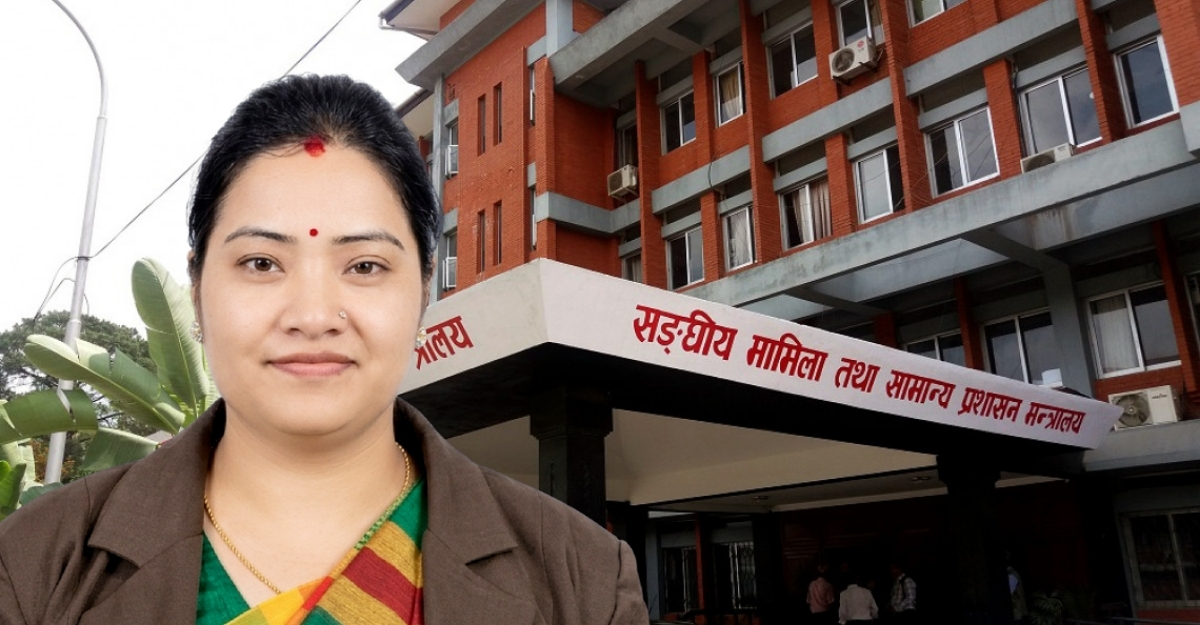
Minister for Federal Affairs and General Administration Pratibha Rawal said the government has intensified monitoring of such activities to strengthen discipline and accountability in the civil service. She stated that employees found violating the law would face immediate suspension and that ministries have been instructed to cooperate in investigations.
The ministry also issued a public notice last Wednesday stating that legal proceedings had been initiated against employees who remained abroad after the expiration of their study leave or extraordinary leave. According to the notice, two computer operators employed by the ministry failed to return to work after their approved leave ended. An investigation subsequently confirmed that both had obtained foreign permanent residency status.
Under civil service regulations, employees must report back to work within 30 days after the end of approved leave. The two employees were asked to submit explanations with supporting evidence within 15 days. The ministry warned that if they fail to respond or if their explanations are deemed unsatisfactory, further action will be taken in accordance with existing laws.
The ministry added that it has intensified efforts to locate and investigate other government employees who are living abroad, absent from duty, or have remained out of contact for extended periods.