By Hom Lamsal

In recent times, there has been growing public interest in the nature and frequency of executive orders signed almost daily by the U.S. President. These orders, often involving significant policy shifts—particularly on immigration—have become a source of anxiety for many. As such, curiosity around what executive orders are and how they function has increased. This article seeks to explore the history and background of executive orders in the United States.
Screenshot
Trump’s Executive Orders: A Surge in Numbers
During his first term (January 2017 to January 2021), President Donald Trump signed a total of 220 executive orders. By January 2025, 72 of these (around 33%) had been revoked, primarily by his successor, President Joe Biden.
As of August 25, 2025—just over seven months into his second term—Trump had already signed 192 new executive orders, signaling a pace that could double his first-term tally. According to official records from the Federal Register, executive orders had reached number 14,338 by August 2025, starting from 14,147 when Trump resumed office in January.
Most recently, President Trump signed an executive order calling for punitive action against those who burn the national flag. Current data indicates that he has issued nearly one executive order per day since the beginning of his second term.

What Are Executive Orders?
In the U.S., the President—who serves as the head of state, head of government, and commander-in-chief—is the sole authority empowered to issue executive orders. This power is granted under Article II of the U.S. Constitution.
Executive orders are legally binding directives issued to federal administrative agencies. Like legislative acts or agency regulations, they are subject to judicial review and can be invalidated if found unconstitutional or in conflict with existing laws. While some policies require Congressional approval, executive orders can have a major impact on internal governmental operations. Historically, they’ve been used to define how laws are implemented, respond to emergencies, make military decisions, and adjust broader policy goals.
An executive order remains in effect until it is revoked, deemed illegal, or expires automatically. Sitting presidents can revoke, amend, or create exceptions to previous orders issued by former presidents. For example, President Biden revoked 72 executive orders from Trump’s first term. Similarly, when Trump returned to office in 2025, he signed Executive Order No. 14148, titled “Initial Revocation of Harmful Executive Orders and Activities,” which revoked 68 executive orders and 11 presidential memoranda issued by Biden, targeting policies related to diversity, climate change, immigration, and inclusion. In total, Trump has revoked approximately 78 of Biden’s executive orders.

Understanding Executive Orders in the U.S.
In essence, executive orders are constitutionally authorized directives issued by the president to manage federal government operations. These are binding only on the executive branch of the federal government.
Their legal foundation typically stems from:
-
The U.S. Constitution (primarily Article II)
-
Statutory authority granted by Congress (either directly or indirectly)
Before an executive order is issued, it is often proposed by federal agencies. Except for William Henry Harrison—who died shortly after taking office—every U.S. president since George Washington has issued such directives. In the early years, there was no standardized format, which led to significant variation in structure and content. That changed with formalization in the early 20th century.
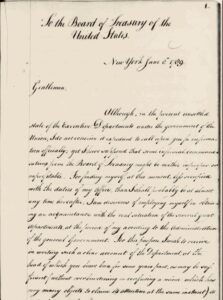
The first executive order in U.S. history was issued by George Washington on June 8, 1789, directing federal department heads to provide detailed reports about their respective agencies. According to political scientist Brian R. Dirck, one of the most historically significant executive orders was issued by Abraham Lincoln on January 27, 1862—General War Order No. 1, which coordinated a unified military offensive against Confederate forces during the Civil War.
Before executive orders were formally numbered in 1907, presidents like Lincoln had already issued hundreds of such directives. Some notable ones included:
-
Establishing temporary courts in Louisiana (1863)
-
Placing all telegraph lines under military control (1862)
These actions reflect how presidential executive authority has been used decisively during times of national crisis.

Presidents with the Most Executive Orders
The record for the most executive orders in U.S. history is held by Franklin D. Roosevelt (FDR), who issued a staggering 3,721 executive orders. His presidency spanned both the Great Depression and World War II—periods marked by political and economic instability, where swift executive action was often required in the absence of Congressional consensus.
In the 1930s, amid the Great Depression, Roosevelt used executive orders to rapidly implement:
-
Employment programs
-
Banking reforms
-
Agricultural assistance
-
Social security measures
Later, during World War II, Roosevelt employed executive orders for:
-
Military conscription
-
Supply chain regulation
-
Civil defense
-
Strategic international coordination
One controversial order from Roosevelt’s tenure was Executive Order 6102, issued in 1933, which required American citizens to hand over their privately held gold to the federal government. This order was highly disputed for two reasons:
-
Many considered it unconstitutional, as it infringed on individuals’ property rights.
-
After collecting gold at a fixed rate, the government later increased its value, angering citizens who had been forced to sell at the lower rate—an act seen by many as deceptive.
International Perspectives on Executive Orders
The concept of executive orders is not unique to the U.S. In many countries, similar mechanisms exist, allowing a nation’s chief executive (like a president or prime minister) to manage federal administration. However, the structure and legal authority of these orders vary from country to country.
In presidential systems like the United States, such orders are common and legally binding within the executive branch. In parliamentary systems like the UK or Canada, comparable orders are typically issued in the name of the monarch or governor-general, acting on ministerial advice.
In countries like France or Russia, the executive may have the authority to issue temporary laws or decrees, especially during emergencies. These are generally subject to parliamentary oversight or judicial review.
Conclusion
Executive orders have long been a powerful tool for U.S. presidents to swiftly implement policy, especially during crises. While some orders have been instrumental in navigating the country through wars and economic downturns, others—like Executive Order 6102—remain highly controversial. As history shows, their use continues to evolve, reflecting each president’s priorities, political climate, and the balance of power between the executive and legislative branches.