The Nepal government is moving to tighten restrictions on foreign travel by civil servants and other government employees amid growing concerns over irregularities, lack of transparency, and the limited measurable benefits of official overseas trips.

The government has said it will strictly enforce existing standards governing foreign travel by civil servants and government employees to make such trips more organized, economical, and results-oriented. The move comes amid concerns that large numbers of government employees travel abroad every year, while the benefits to the government and the country remain difficult to measure.
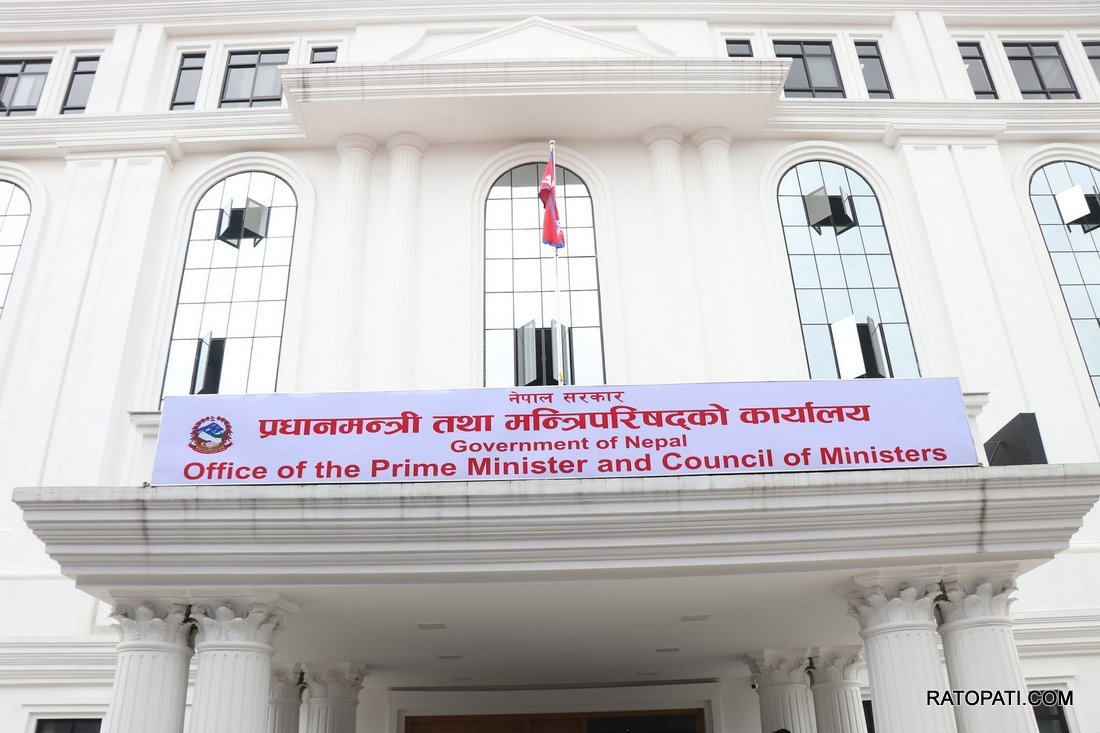
The Office of the Prime Minister and Council of Ministers has circulated a directive to all ministries, commissions, and government agencies requiring prior approval from the Prime Minister’s Office before nominating any employee for an overseas trip.
The government has instructed agencies to strictly prevent official foreign travel and employee nominations made without prior approval.
In addition, the government has introduced stricter requirements to ensure that knowledge gained during overseas assignments is shared and institutionalized within the government system.
Employees returning from overseas study programs, visits, training, meetings, seminars, workshops, or conferences must share the knowledge, skills, and best practices they acquired with colleagues.
Under the new standards, employees must complete a knowledge- and experience-sharing session within five days of returning to their office.
The government expects the new policy to limit foreign travel based on actual need and justification while ensuring more economical use of public resources. It also aims to make it easier to measure whether knowledge and experience gained abroad are actually being applied to government work.
Alongside the cost and benefits of sending government employees abroad at public expense, another important question has emerged: How many senior government officials who traveled to countries such as the United States, Australia, and Canada on official trips actually returned to Nepal?
The government does not currently have a comprehensive database showing how many government employees failed to return to Nepal after official foreign trips.
According to data from Nepal’s Department of Immigration, 13,293 people traveled abroad under the “official visit” category in 2024. Of them, 10,101 were men and 3,191 were women.
However, it is not clear whether all 13,293 individuals were civil servants. The data do not separately identify their positions, ministries, destinations, duration of travel, or whether they subsequently returned to Nepal.
As a result, there is no definitive public data showing how many of those 13,293 people traveled to the United States, Australia, or Canada, or how many failed to return to Nepal.
There are also concerns that some government employees who traveled abroad may have subsequently obtained permanent residency or other forms of long-term legal status in foreign countries.
The government is reportedly examining such cases as part of a broader effort to review overseas travel by government employees.
Department of Immigration data show that 66,835 Nepalis left the country for permanent settlement abroad in 2024.
Similarly, 24,262 people traveled abroad for conferences, seminars, or training, while 119,409 traveled for study.
Although these figures demonstrate the large number of Nepalis traveling abroad, the data do not separately identify how many were government employees.
Determining the relationship between official foreign travel and permanent migration would therefore require authorities to match individual names, positions, travel dates, official travel records, and immigration entry-and-exit records.
Government ministries maintain records of official foreign travel, and some agencies have publicly disclosed such information. For example, the Ministry of Urban Development has published details of employees who traveled abroad during fiscal year 2079/80.
However, there is no unified public database covering all government agencies.
More importantly, there is currently no publicly accessible system that separately tracks whether government employees returned to Nepal after completing official foreign assignments.
The Department of Immigration is responsible for maintaining records of the entry and exit of Nepali citizens. Such records could potentially be matched with government travel records to determine whether employees who traveled abroad on official assignments subsequently returned to Nepal.
The United States, Australia, and Canada have become attractive destinations for government employees because of opportunities for study, training, conferences, and government-sponsored programs.
These countries also offer various legal pathways to permanent residency, raising questions about the connection between official foreign travel and subsequent personal migration.
However, there is no publicly available separate record of government employees who traveled abroad at public expense and later obtained a green card, permanent residency, or another form of long-term residence and remained overseas.
A review of the names, positions, purposes, and duration of overseas trips taken by senior government employees to the United States, Australia, and Canada between 2020 and 2026, followed by comparison with their immigration entry-and-exit records, could potentially provide a clearer picture of how many officials traveled abroad at government expense and subsequently remained overseas.
There are also reports of government employees who return to Nepal after overseas assignments only to resign from government service or take extended leave before going abroad again.
The broader migration figures also illustrate the scale of Nepal’s international mobility.
According to Department of Immigration data, 1,603,836 Nepalis traveled abroad in 2023. More than 800,000 traveled overseas for employment, while another large number traveled for education, tourism, study, training, and other purposes.
That year, 204,518 Nepalis traveled abroad for tourism, while around 71,000 left the country for permanent settlement.
The immigration statistics also include some individuals who traveled abroad and returned multiple times during the year. According to the Department of Immigration, 1,263,469 Nepali citizens returned to Nepal from abroad in 2023.
The return figure counts Nepali citizens recorded as entering Nepal and does not necessarily mean that every person who left Nepal during the year returned during the same period.
Several developing countries have introduced stronger systems to ensure that overseas government travel produces measurable benefits.
Experiences from countries such as the Philippines, Rwanda, and India show that foreign travel is increasingly linked to prior approval, post-travel reporting, knowledge transfer, implementation plans, and performance evaluation.
In the Philippines, prior approval, justification for overseas travel, and maximizing national benefits from government-funded trips are given significant importance.
Government employees returning from international conferences, training, study programs, or official missions are required in various government agencies to submit reports detailing their achievements, lessons learned, and recommendations within a specified period.
Some government agencies also require employees returning from overseas training to propose how newly acquired knowledge and skills can be incorporated into institutional programs and work processes.
This approach shifts evaluation away from simply determining whether an employee attended a training program toward assessing what results were produced by the training.
The Philippines also has provisions under some government scholarship and training programs requiring employees who receive public funding for overseas education or training to serve the government for a specified period after completing their studies.
In certain circumstances, employees who fail to complete the required service period may be required to repay some or all of the government’s expenses.
Rwanda has developed a more structured system for institutionalizing knowledge gained from overseas training and study.
Government employees returning from training, conferences, or study programs are required to prepare training reports and share what they learned with other employees through knowledge-sharing programs.
The objective is to ensure that knowledge acquired by one employee abroad does not remain with that individual but is transferred to the wider institution.
India has also increasingly linked overseas training with government capacity building.
The Capacity Building Commission works to strengthen knowledge sharing, training materials, and the exchange of best practices among government training institutions.
The broader objective is to ensure that effective practices learned from international programs and other institutions are adapted for use within the Indian government system.
India’s approach increasingly treats international training not simply as an individual employee’s experience, but as a component of institutional capacity development.
Nepal’s biggest challenge is not simply the number of government employees traveling abroad. It is the lack of an integrated system capable of answering three basic questions:
How many government employees travel abroad on public funds? How many return to Nepal? And how many remain abroad after obtaining another form of legal residence?
Answering these questions would require government agencies to integrate official foreign-travel records with immigration entry-and-exit data and, where legally appropriate, information on permanent residency or other long-term immigration status.
The government’s new requirement for prior approval and mandatory knowledge sharing within five days of returning is therefore an important first step. However, for foreign travel to become genuinely results-oriented, Nepal may also need a system that measures the cost, output, knowledge transfer, implementation, and long-term outcome of every publicly funded overseas assignment.
Only then will it be possible to determine whether government-funded foreign travel is actually producing benefits for the Nepali state—or merely creating opportunities for individual employees to travel abroad.