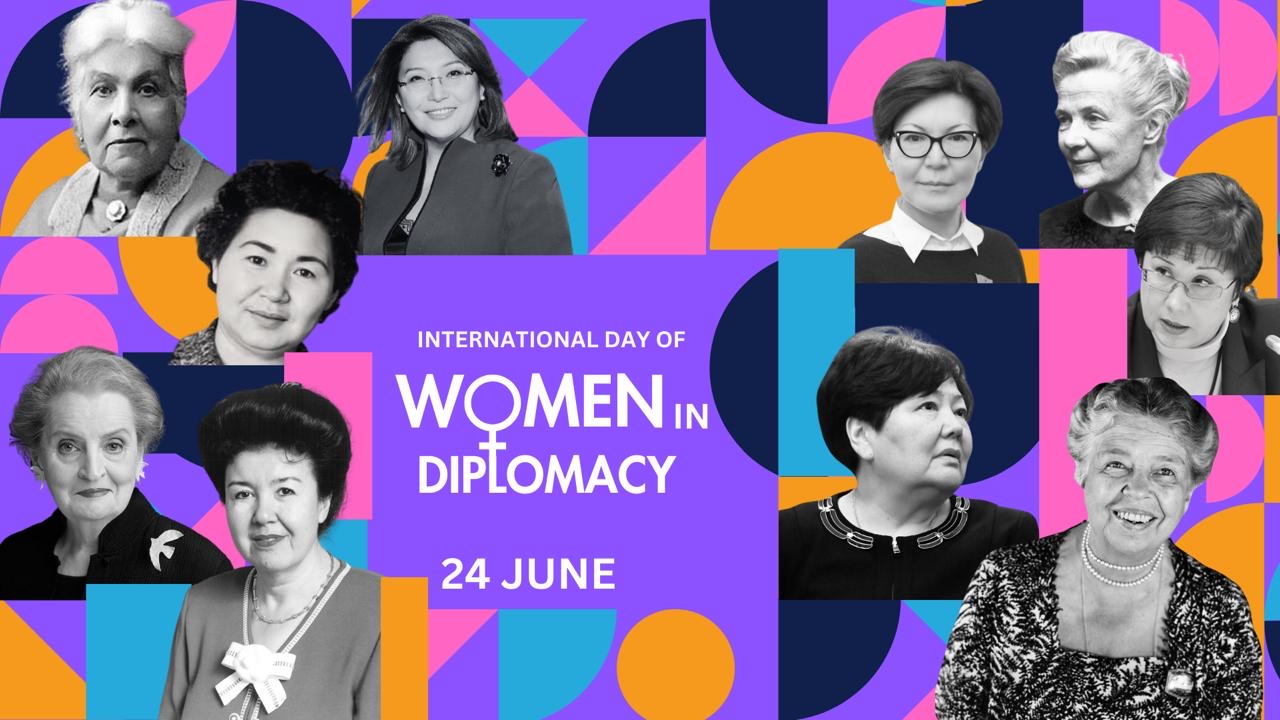
The world is marking the International Day of Women in Diplomacy today. The day is observed annually on June 24 after being proclaimed by the United Nations in 2022. Its objective is to promote women’s participation and leadership in diplomacy, international relations, peacebuilding, conflict resolution, and global decision-making processes.

Although women’s political and social participation has increased in most countries, various studies show that their representation in diplomatic leadership positions remains comparatively low.
Globally, women remain significantly underrepresented in diplomacy. As of 2025, only about 22.5 percent of ambassadors and permanent representatives to the United Nations worldwide are women. In other words, only about two out of every ten ambassadors are female.
In 2024, women accounted for only 21 percent of permanent representatives to the United Nations. Since the establishment of the UN in 1947, women have comprised only 7 percent of all permanent representatives appointed to the organization. Furthermore, 73 countries have never appointed a female permanent representative to the United Nations.
Only 25 countries worldwide currently have a female head of state or head of government. Women’s participation in national cabinets stands at just 22.9 percent, while key ministries such as foreign affairs and defense continue to be dominated by men.
Studies indicate that despite progress in women’s participation in diplomacy, significant challenges remain. Even after entering diplomatic careers, women often face barriers to reaching leadership positions. Gender bias, limited access to decision-making processes, pressure to balance family and professional responsibilities, and security-related risks in some countries remain major obstacles.
In many places, doubts still persist regarding women’s leadership capabilities in diplomacy. In addition, limited access to influential informal networks and policy-making circles often affects women’s promotion prospects and their ability to expand their influence.
The United Nations has emphasized that meaningful participation of women is essential for effective peacebuilding, conflict resolution, and international cooperation. The organization continues to encourage member states to provide greater opportunities, leadership development programs, and inclusive policies to promote gender equality in diplomacy.
The International Day of Women in Diplomacy recognizes the contributions women have made toward global peace, cooperation, and stronger international relations while advocating for greater representation in diplomatic leadership.
Women in diplomacy are not merely participants in international affairs; they are architects of peace, advocates for equality, and leaders shaping the future of global cooperation. Their voices, perspectives, and leadership are indispensable for addressing the complex challenges facing the world and building more inclusive, just, and resilient societies.
As diplomacy evolves to meet the demands of an increasingly interconnected world, ensuring women’s full, equal, and meaningful participation at all levels of decision-making is not only a matter of equality but also a prerequisite for effective global governance. It reinforces the commitments of the Beijing Platform for Action and the Sustainable Development Goals.
When women are present where decisions are made, diplomacy becomes more representative of society and better equipped to advance sustainable peace, sustainable development, and human dignity.
Across diplomatic missions, multilateral institutions, and international negotiations worldwide, women have played critical roles in dialogue, consensus-building, conflict resolution, and international cooperation. Their leadership has helped bridge national priorities and global challenges while advancing solutions that promote human rights, security, and shared prosperity.
The International Day of Women in Diplomacy highlights the importance of including diverse voices and experiences in the pursuit of peace and progress. It is not only a celebration of the achievements of women diplomats but also a call to remove existing barriers, expand opportunities, and empower future generations of women to lead, influence, and shape international affairs.
Historically, women were largely excluded from formal diplomatic roles and international decision-making processes. Over time, they have broken through numerous barriers and expanded their presence in diplomatic services, international organizations, peace processes, and multilateral negotiations. Their contributions have strengthened efforts to promote peace, security, development, and human rights around the world.
Despite notable progress, however, women remain underrepresented in many diplomatic and political leadership positions, underscoring the need for continued efforts to ensure equal participation and representation.
Research has shown that meaningful participation of women in peacebuilding, mediation, and conflict resolution leads to more inclusive and sustainable outcomes. Likewise, gender equality and the empowerment of women and girls are essential for achieving sustainable development and building societies where everyone can contribute and thrive.
Observed every year on June 24, the International Day of Women in Diplomacy encourages governments, international organizations, academic institutions, civil society, and diplomatic communities to increase women’s participation, remove structural barriers, and ensure equal opportunities in decision-making processes that affect communities, nations, and the world.
Women are often recognized for their ability to remain grounded while also envisioning long-term possibilities for the future. International norms and standards play an important role in establishing common principles for the global community and guiding nations in their implementation. The growing presence of women in global diplomacy is expected to make international relations more inclusive, accountable, and effective.
In Nepal, the number of women diplomats has also been gradually increasing. Nepali women are serving as ambassadors, foreign service officers, and representatives of international organizations. Nevertheless, broader and more effective participation at decision-making levels remains necessary.
According to the United Nations, meaningful participation of women is indispensable for sustainable peace, inclusive development, and effective diplomacy. The observance of this day is expected to honor the contributions of women in diplomacy while inspiring a new generation of women leaders.
The United Nations itself has faced challenges in achieving gender parity. Nevertheless, significant progress has been made over the past six years under the leadership of the Secretary-General. In 2020, gender parity was achieved among the UN’s senior leadership. The organization is on track to achieve parity at all levels at headquarters within the next five years.
However, the United Nations has yet to appoint a female Secretary-General. Women also remain underrepresented in UN security-related missions and peacekeeping operations, where diversity is particularly important.
As a major contributor to UN peacekeeping operations, Kazakhstan has consistently deployed female peacekeepers and female military observers to UN missions. The country has also adopted a National Action Plan to implement UN Security Council Resolution 1325 on Women, Peace and Security, prioritizing greater participation of women in international peace and security dialogues.
Achieving full and equitable representation requires carefully designed policies and measures that strengthen women’s rights. Structural barriers to women’s equal participation must be dismantled, as women in many foreign ministries around the world continue to be concentrated in supporting rather than leadership roles.
While meaningful progress has been achieved, the journey toward full gender equality in diplomacy remains ongoing. Expanding women’s representation and leadership in international affairs will be essential for building a more inclusive, peaceful, and sustainable world.