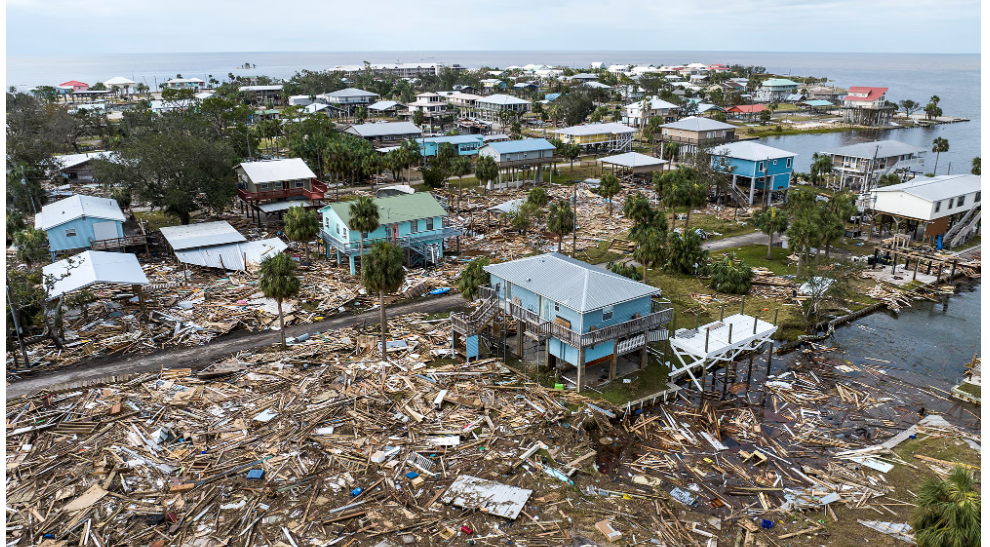
Due to climate change, from 2019 to 2023, the maximum wind speed generated by 84% of Atlantic hurricanes increased by an average of 18 miles per hour. According to a study, rising global temperatures have increased sea surface temperatures, intensifying these hurricanes—30 of which intensified explosively and became one category stronger compared to what would have been expected in a world without human-induced climate change.

The study concludes that every hurricane in 2024 has been more powerful than what would have occurred 100 years ago.
Climate change has increased the wind speeds of all Atlantic hurricanes in 2024. The study used scientific methods to measure the impact of sea surface temperature on the intensity of tropical cyclones. It found that three hurricanes—Lorenzo (2019), Ian (2022), and Lee (2023)—reached Category 5 due to climate change. Similarly, according to 2024 season analysis, two more hurricanes—Beryl and Milton—would have been less likely to reach Category 5 if not for the effects of climate change.
According to a supporting report on the 2024 Atlantic Basin hurricane season, the maximum wind speeds of all 11 hurricanes so far increased by 9 to 28 miles per hour due to rising sea surface temperatures directly linked to climate change.
“Every hurricane in 2024 was stronger than those from 100 years ago,” said Dr. Daniel Gilford, climate scientist and lead author of the study. “Due to the unprecedentedly heated ocean, human-induced carbon pollution is worsening hurricane-related disasters in our communities.”
Specifically, Hurricane Milton intensified by 120 miles per hour within 36 hours—driven by sea surface temperatures that were 400–800 times more likely due to climate change. The analysis found those temperatures to be three degrees Fahrenheit higher than normal, which would not have been possible without the impact of carbon pollution.
Although the study focused on Atlantic Basin hurricanes, the rapid analysis framework it developed can be applied to tropical cyclones worldwide. “It is crucial to measure and clearly communicate the impact of climate change on hurricanes,” said co-director Dr. Ralf Toumi. In this excellent study, Gilford, Guiguiere, and Pershing present an impressive new framework. It adjusts for the fingerprint of climate change on sea surface temperatures using the concept of hurricanes’ maximum potential intensity. This original and in-depth work now provides a path to quickly assess the link between hurricane intensity and climate change.