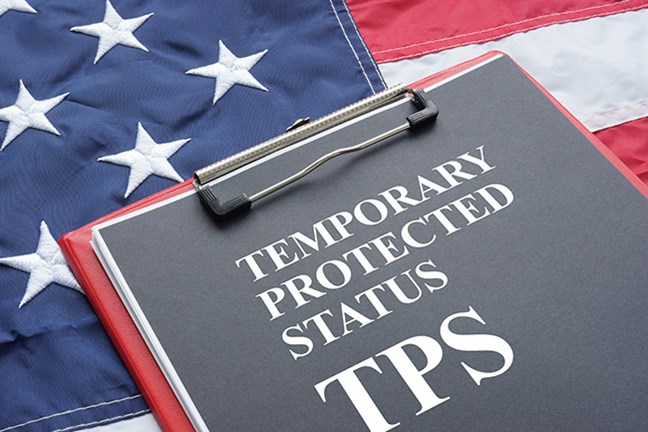
The U.S. government’s decision to terminate the Temporary Protected Status (TPS) granted to Nepalis living in the United States has moved closer to implementation. The administration’s effort to end TPS for Nepalis has advanced after the Ninth Circuit Court of Appeals stayed an order issued by a lower court that had blocked the termination.

According to the U.S. Congressional Research Service, approximately 1,297,635 people from 17 countries were covered by TPS as of March 31, 2025. The largest groups were nationals of Venezuela, Haiti, El Salvador, and Ukraine. However, this is not the current number. Since then, the Trump administration has decided to terminate TPS for nationals of several countries, while some of those decisions have been blocked by courts or subsequently allowed to proceed.
As of March 2025, 1,297,635 people from 17 countries were covered by TPS in the United States. Since then, the Trump administration has decided to terminate TPS for 13 countries. The largest groups affected are Venezuelans and Haitians, while approximately 7,000 Nepalis are also facing the loss of TPS protection.
According to the U.S. Department of Justice, lawsuits were filed challenging the decisions to terminate TPS for nationals of Nepal, Honduras, and Nicaragua. Following the latest appellate court ruling, however, the lower court’s injunction preventing the termination is no longer in effect.
The U.S. administration published its decision to terminate TPS for Nepal in the Federal Register on June 6, 2025. Under that decision, TPS and related protections for Nepalis were scheduled to end on August 5, 2025.
However, after a lawsuit was filed challenging the decision, a federal court in the Northern District of California blocked its implementation on December 31, 2025. More recently, the Ninth Circuit Court of Appeals stayed the lower court’s order, clearing the way for the administration to proceed with the termination of TPS for Nepalis.
The United States granted TPS to Nepali nationals following the devastating earthquake that struck Nepal on April 25, 2015.
The program was initially introduced in June 2015 for a limited period and was subsequently extended several times. Nepalis who had arrived in the United States by the designated cutoff date were eligible for the protection.
Under TPS, eligible Nepalis were allowed to remain temporarily in the United States with lawful protection and were authorized to work.
The U.S. administration later determined that conditions in Nepal following the earthquake no longer met the criteria required for TPS and decided to terminate the program.
The Trump administration has also moved to terminate TPS for nationals of several other countries, including Afghanistan, Cameroon, Honduras, Nicaragua, Venezuela, Haiti, Myanmar, Ethiopia, South Sudan, Somalia, and Yemen.
Legal challenges have also been filed against the termination of TPS for Myanmar and South Sudan. Following a court order issued on August 7, 2026, the administration was able to move forward with efforts to terminate TPS for nationals of both countries.
Similarly, in a case challenging the termination of TPS for Somalia, federal Judge Alison Burroughs on August 14, 2026, cleared the way for the Trump administration to terminate TPS for approximately 1,100 Somali nationals.
The situation is different for Ethiopian nationals. Although the administration decided to terminate TPS for Ethiopia on December 15, 2025, a court order blocking implementation remains in effect, meaning TPS protection for Ethiopians has not yet ended.
For Yemen, the administration announced the decision to terminate TPS on March 3, 2026.
Following the Ninth Circuit’s ruling, the legal status of Nepalis currently covered by TPS is likely to change. Once TPS ends, they may need to pursue other legal immigration options to maintain authorization to remain and work in the United States.
However, ongoing litigation and the administrative implementation process remain important. The final timeline, impact of the termination, and legal options available to Nepalis will depend on formal notices and further action by U.S. immigration authorities and the courts.
The decision is particularly significant for Nepalis who have lived and worked in the United States under TPS for many years and have built their lives around this temporary protection.
More Than 1.2 Million TPS Beneficiaries
According to the Congressional Research Service, 1,297,635 people from 17 countries were covered by TPS as of March 31, 2025. The largest groups were nationals of Venezuela, Haiti, El Salvador, and Ukraine.
Again, this figure does not represent the current number of active TPS beneficiaries. Since March 2025, the Trump administration has taken steps to terminate TPS for multiple countries, while some termination decisions have been challenged in court and others have been allowed to proceed.
The latest available figures indicate that Venezuelans and Haitians are among the largest groups affected by the TPS terminations.
As of March 2025, 605,015 Venezuelans were covered by TPS. Haiti had 330,735 TPS beneficiaries, while later estimates have put the number of Haitian TPS holders at approximately 350,000. The administration has moved to terminate Haiti’s TPS, but litigation over the decision remains ongoing.
Similarly, approximately 174,000 Salvadorans are covered by TPS. Their protection is currently scheduled to remain in effect until September 9, 2026.
Approximately 63,000 Ukrainians are also covered by TPS, with their protection scheduled to remain in effect until October 19, 2026.
For Nepal, the U.S. administration has already decided to terminate TPS. U.S. data show that 7,160 Nepalis were covered by TPS as of March 2025.