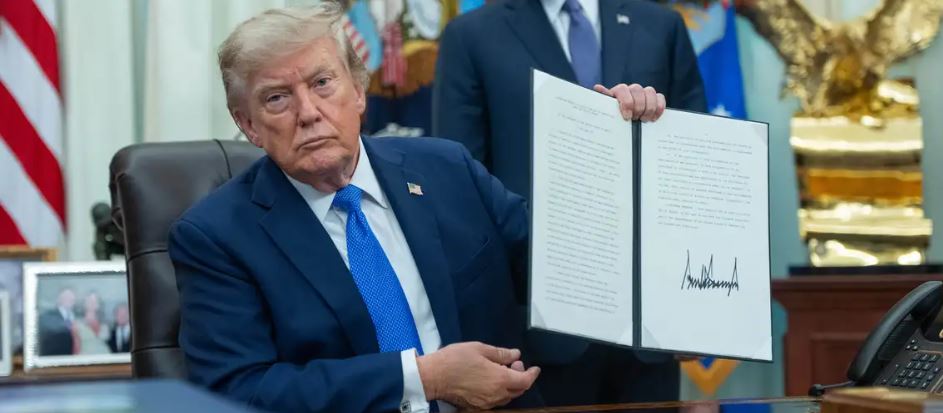
U.S. President Donald Trump on Thursday signed two new executive orders aimed at restricting birthright citizenship and curbing so-called “birth tourism.” He also criticized a previous ruling by the U.S. Supreme Court that blocked an earlier attempt by his administration to limit birthright citizenship.

Two months ago, the U.S. Supreme Court, in a 6–3 decision, rejected the Trump administration’s previous effort to challenge the constitutional guarantee of automatic citizenship for individuals born on U.S. soil. Responding to the ruling, Trump said, “It was a very close decision, but an extremely unfortunate one.”
The 14th Amendment to the U.S. Constitution grants automatic U.S. citizenship to most children born in the United States. There are limited exceptions, including children of foreign diplomats and children born to enemy forces during wartime.
Trump argued that the provision was originally adopted after the Civil War to grant citizenship to the children of formerly enslaved people but claimed that it is now being abused.
What do the new executive orders do?
According to Trump’s immigration policy adviser Stephen Miller, the first executive order seeks to deny birthright citizenship to children born to members of foreign terrorist organizations and certain individuals working on behalf of foreign governments.
Miller said the measure is intended to prevent people from improperly obtaining the benefits of birthright citizenship. The second executive order targets “birth tourism”—the practice of pregnant women traveling to the United States on tourist visas primarily so their children will be born as U.S. citizens. “Visas will no longer be issued for that purpose,” Miller said.
There are no official government statistics on the number of foreign women who travel to the United States to give birth. However, the pro-Trump organization Center for Immigration Studies has estimated that between 20,000 and 25,000 women engaged in birth tourism annually during 2016–2017.
The White House maintains that the new executive orders do not conflict with the Supreme Court’s earlier ruling. However, legal experts say the measures are likely to face court challenges.
Trump said, “I thought we were going to win at the Supreme Court. Instead, we received an unfair decision. So now we’re addressing this problem in a different way.”
Current U.S. law does not completely prohibit birth tourism. However, under regulations that took effect in 2020, individuals are not permitted to use tourist or business visas if their primary purpose for traveling to the United States is to obtain U.S. citizenship for their child.